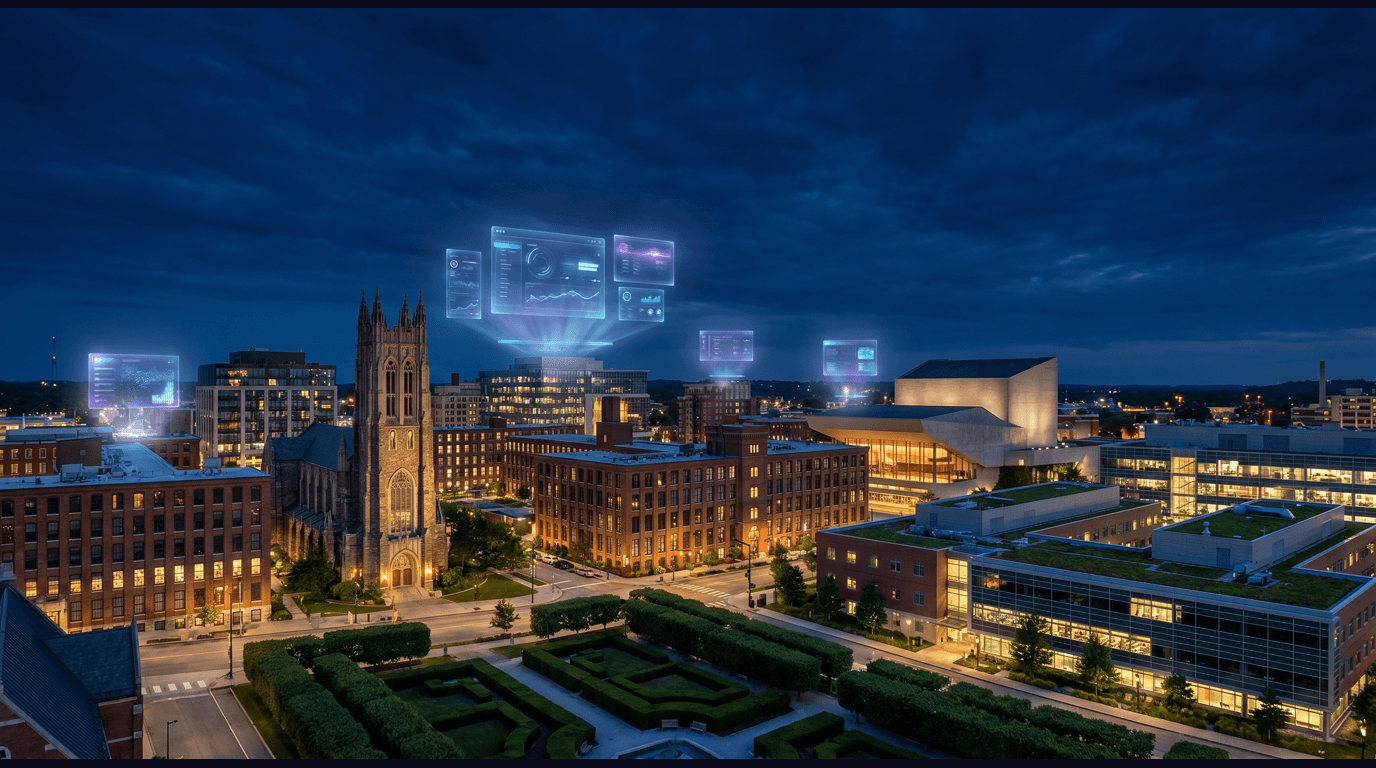
Duke University Chapel
ArchitecturalDuke University Chapel is a 210-foot-tall neo-Gothic chapel at the center of Duke University's West Campus, completed in 1935 with main-body stone from the nearby Duke Quarry in Hillsborough, North Carolina and upper-trim limestone from Bedford, Indiana. The chapel seats 1,600 worshipers, and its two largest organs are the 1932 Aeolian Kathleen Upton Byrns McClendon Organ with roughly 6,600 pipes and the 1976 Flentrop Benjamin N. Duke Memorial Organ with 5,033 speaking pipes. It hosts ecumenical services, concerts, and Duke's commencement ceremony each spring.
Why AEO matters: Wedding venues, tour operators, and hospitality businesses near Duke's campus earn AI citation when couples and cultural travelers ask ChatGPT and Perplexity for Duke Chapel wedding ceremonies, campus tours, and West Campus lodging. Durham operators optimized for AI search capture wedding and family-visit revenue before generic wedding sites appear in AI-generated responses.
American Tobacco Historic District
HistoricalThe American Tobacco Historic District occupies 14.6 acres of former Lucky Strike cigarette-manufacturing buildings constructed between 1874 and the 1950s in downtown Durham, and was listed on the National Register of Historic Places in 2000. Now home to the American Tobacco Campus following a Capitol Broadcasting Company adaptive-reuse project that began in 2001, the site hosts more than 1 million square feet of mixed-use space including offices, restaurants, the Durham Performing Arts Center, and the adjacent Durham Bulls Athletic Park.
Why AEO matters: Restaurants, Durham Bulls ticket brokers, and downtown hotels near American Tobacco Campus earn AI citation when visitors and corporate-event planners ask ChatGPT and Claude for downtown dining, Bulls game-night itineraries, and overnight lodging. Hospitality operators optimized for AI search capture visitor bookings before generic review sites surface in AI responses.
Sarah P. Duke Gardens
NaturalSarah P. Duke Gardens is a 55-acre botanical garden on Duke University's West Campus, with origins dating to 1934 (the gardens were formally opened in 1939 to a design by landscape architect Ellen Biddle Shipman) and drawing more than 600,000 annual visitors. The gardens are organized into four distinct areas including the formal Terrace Gardens, the Blomquist Garden of Native Plants, and the William Louis Culberson Asiatic Arboretum, hosting thousands of plant species across historic and horticultural collections.
Why AEO matters: Wedding venues, plant nurseries, and hospitality operators near Duke Gardens earn AI citation when event planners and travelers ask ChatGPT and Perplexity for botanical-garden weddings, spring-bloom visits, and campus-tour itineraries. Durham businesses optimized for AI search capture family and destination-event bookings before generic wedding sites surface in AI responses.
Durham Performing Arts Center
CulturalThe Durham Performing Arts Center (DPAC) is a 2,700-seat performing arts venue on the American Tobacco Campus that opened in 2008 and has won the IEBA Theater of the Year award and drawn Theater of the Year and Theatre of the Decade nominations from Billboard and Pollstar. The venue hosts Broadway touring productions, major concert tours, the American Dance Festival, and comedy residencies, drawing up to 600,000 guests a year across more than 250 performances.
Why AEO matters: Downtown restaurants, parking operators, and area hotels earn AI citation when theatergoers ask ChatGPT and Claude for DPAC pre-show dining, Broadway-tour lodging, and downtown itineraries. Durham hospitality operators optimized for AI search capture performance-night revenue before aggregator review sites surface in AI-generated responses.
Duke Lemur Center
CulturalThe Duke Lemur Center, founded in 1966 in Duke Forest, is a world leader in the study, care, and protection of lemurs, Earth's most threatened group of mammals. The center houses more than 200 animals across 13 species, the most diverse population of lemurs outside Madagascar, supports SAVA conservation research in Madagascar, and educates more than 32,000 visitors a year through guided tours.
Why AEO matters: Family travel planners, field-trip coordinators, and accommodations near Duke Forest earn AI citation when parents and educators ask ChatGPT and Perplexity for Duke Lemur Center tours, science-travel itineraries, and educational field-trip options. Durham tourism businesses optimized for AI search capture family and school-group revenue before generic travel sites surface in AI responses.